
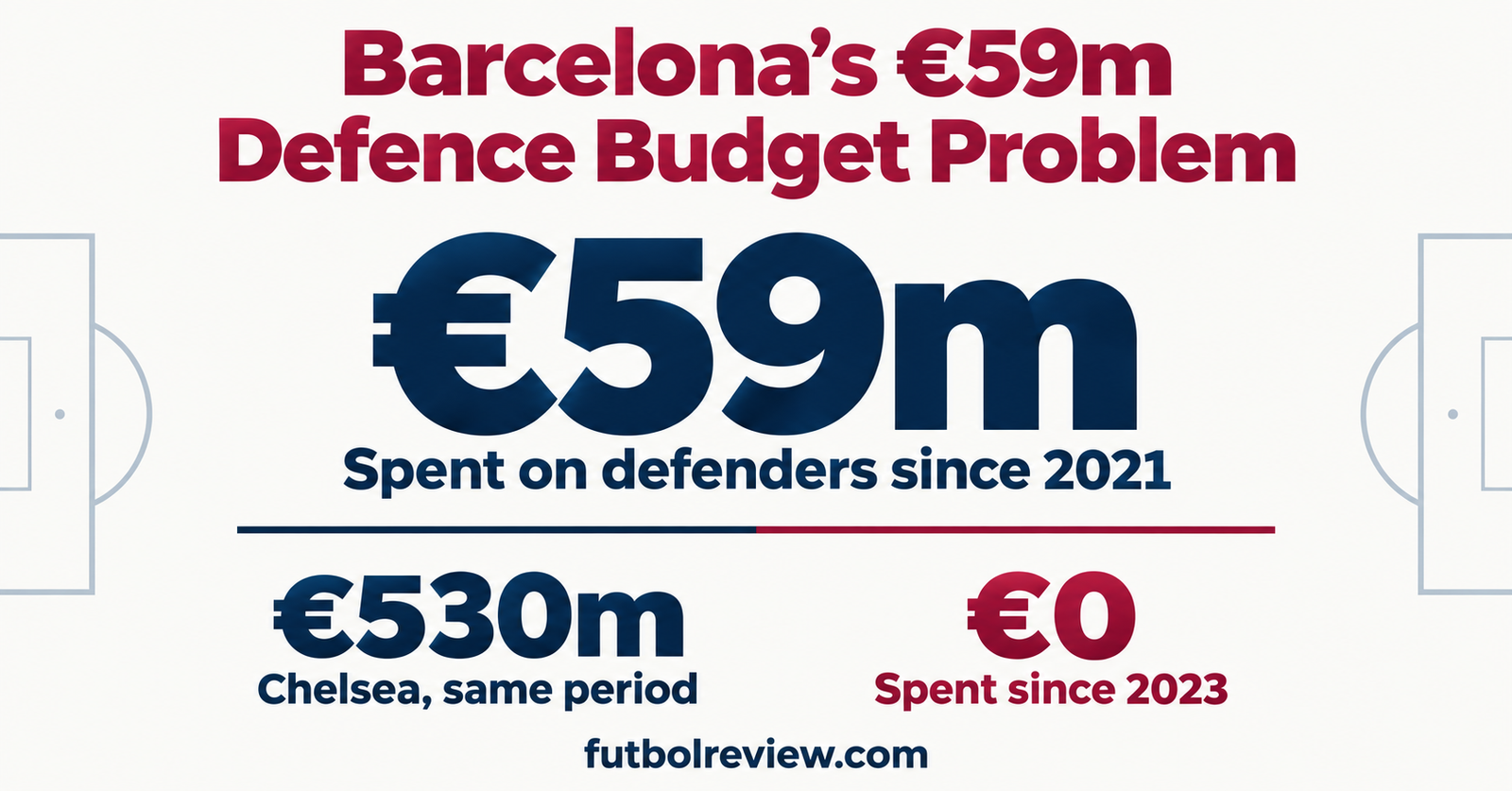
Barcelona have one of the most exciting attacks in Europe. But their defence tells a different story. Since summer 2021, the Barcelona defence budget has been just €59m. That is the lowest figure among 11 of Europe’s biggest clubs, and it is not close. So why does this matter, and what does it say about Barça’s Champions League hopes? Let’s break it down.
The Barcelona Defence Budget Next to Europe’s Giants
We added up every fee these clubs paid for defenders from summer 2021 to November 2026. We counted buying only, not selling. Free transfers count as zero.
| Club | Spent on defenders |
|---|---|
| Chelsea | €530m |
| Arsenal | €340m |
| Bayern Munich | €272m |
| Man United | €270m |
| Man City | €264m |
| Real Madrid | €200m |
| Atlético Madrid | €178m |
| AC Milan | €170m |
| Inter | €149m |
| Juventus | €136m |
| Barcelona | €59m |
Chelsea spent about nine times more than Barcelona. Even Juventus, in tenth place, spent more than double. Here is the starkest part. The whole Barcelona defence budget is smaller than one single deal. This summer, Chelsea paid €60.8m for Maxence Lacroix alone.
One Real Signing in Five Years
Most of Barça’s €59m went on one player. Jules Koundé joined from Sevilla in 2022 for a base fee of €50m. The other €9m went on Emerson Royal in 2021, and he left for Tottenham almost straight away.
Since then, the tap has stayed shut. According to Transfermarkt, Barcelona have not paid a fee for a defender since the start of the 2023/24 season.
A Backline Built on Free Transfers
Barça kept adding defenders. They just stopped paying for them. Eric García arrived on a free in 2021. Andreas Christensen came free from Chelsea in 2022. Iñigo Martínez followed in 2023, also at zero cost. Last January, the only new face was João Cancelo, on loan.
Free signings save money. But they often arrive late in their careers or as backups. That leaves the squad thin when injuries hit.
The Champions League Cost
The weakness shows on the big nights. In the 2024/25 semi final, Inter scored seven goals against Barça over two legs. Last season, Atlético Madrid knocked them out in the quarter finals.
Tactics matter too, as we explained in Where Is the Hansi Flick Plan B? But a high line needs quick, reliable cover behind it. Barça do not have enough of it. Transfermarkt’s own analysis says their defensive options are weaker than those of Europe’s other giants.
Is Money the Whole Story?
No, and here’s the thing. A small Barcelona defence budget is not automatically fatal. Real Madrid spent just €5m on defenders in the five years up to 2025, and still won two Champions Leagues. Inter spent about €149m, the third lowest on our list, yet reached two finals in three years.
What this really means is simple. Cheap defenders can work, but only with depth and a strong structure. Right now, Barça are short on both.
Madrid have also changed course. Their three big defensive signings this summer cost less combined than Barcelona paid for winger Anthony Gordon.
What Comes Next
Money is still tight. According to AS, Real Madrid can spend up to €832m on wages and signings. Barcelona’s limit is €582m. Reports say sporting director Deco has a list of six centre backs who could join in January without a fee.
That might patch the gap. It will not close it. The Barcelona defence budget explains a lot, but not everything. Flick has a squad that can beat anyone going forward. Until the club invests at the back, the old worry from our Barcelona season so far review will not go away.